This November, I attended Ethereum World’s Fair in Buenos Aires, the first event of its kind, and competed in ETHGlobal, a global hackathon offering over $500,000 in prizes from protocols and builders across the ecosystem. For me, the biggest takeaway wasn’t the competition—it was realizing just how tangible and ready this technology now is. We’re past abstract potential and into real infrastructure: mini-apps enabling fast experimentation and distribution, embedded wallets powered by account abstraction reducing onboarding friction to near zero, and x402 payments enabling seamless value exchange across applications.
It feels like we’re finally seeing the cables get laid behind the walls. The part of technology most people don’t see—the plumbing that connects identity, ownership, payments, and interactions—is now mature enough to disappear into the background. That’s when new platforms become possible. Instead of spending months engineering onboarding flows, payment rails, or wallet UX, builders can focus on crafting experiences communities actually want to use. Network effects aren’t emerging from speculation anymore—they’re coming from applications that are simple to join, easy to build on, and deeply social by design.
During the hackathon, I built Mystic Island, a project exploring how these tools can support collaborative, community-driven creative worlds that bridge the digital and physical. At its core, Mystic Island is an experiment: what happens when the friction of participation drops close to zero? What kinds of micro-communities and creative economies become possible when identity, access, and ownership come “out of the box” instead of as startup-level hurdles?
Experiencing all of this in Buenos Aires added a powerful layer of meaning. The city itself tells a story of layers—Belle Époque and Beaux-Arts grandeur, touches of Art Deco, and a strong European architectural legacy, standing side-by-side with visible economic strain and long-term recovery. Walk down certain streets and you see signs of an era when massive capital flowed through the city: ornate facades, sweeping boulevards, ambitious public buildings. Then step around the corner and you’re in neighborhoods where infrastructure feels worn, systems underfunded, and possibility unevenly distributed.
That contrast—beauty paired with pressure, history paired with resilience—felt deeply relevant. It mirrors where technology itself stands. We’ve built dazzling front-end experiences for years, but much of the global population has remained disconnected from financial tools, ownership structures, and creative economies. Now, quietly and mostly unseen, the cables are being run behind the scenes that make those connections possible. The walls are opening everywhere—not just in Silicon Valley, but in cities with complex pasts and enormous creative potential.
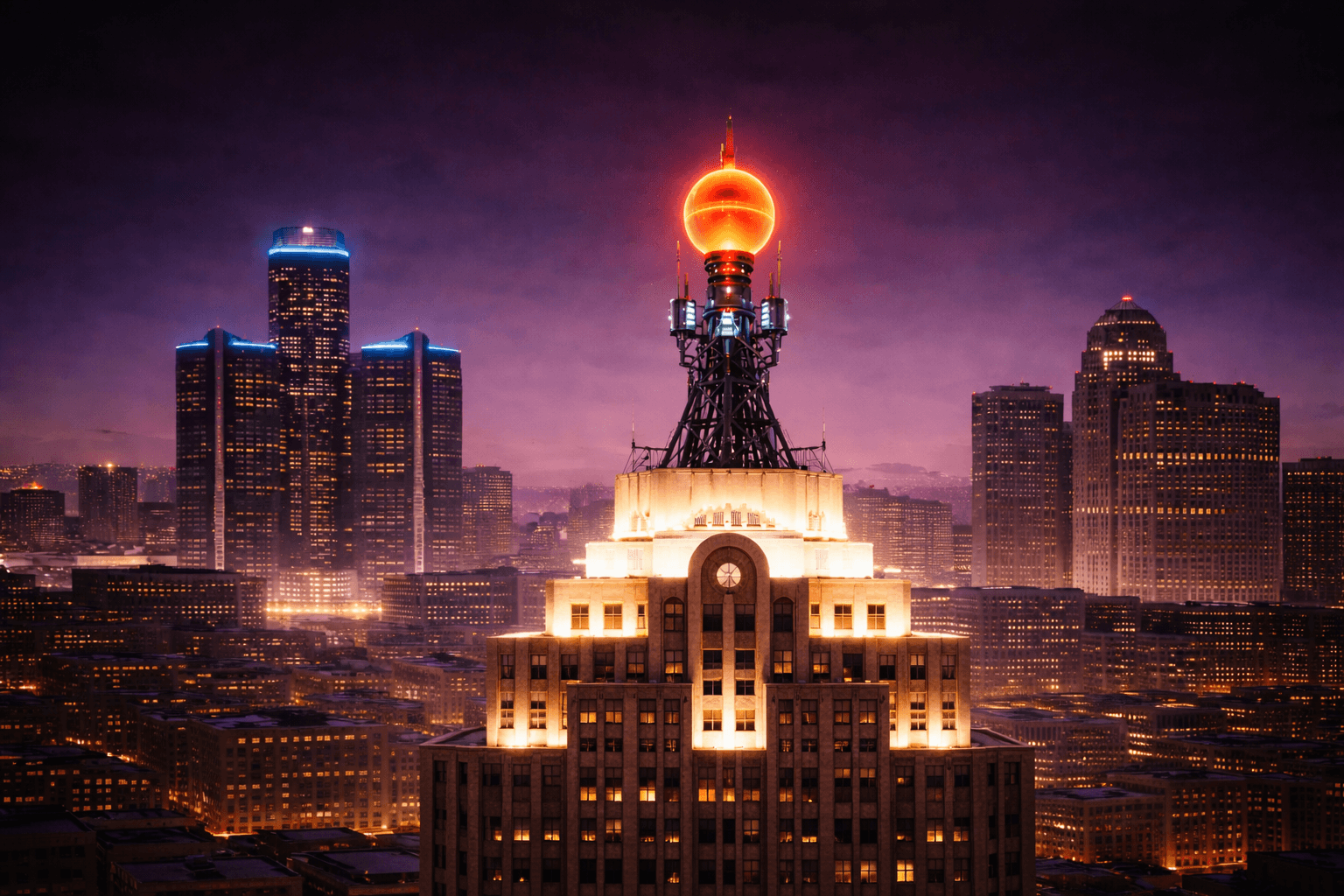
This is the thread that connects what I experienced in Buenos Aires to what we’re building through Barefoot Dev in Detroit. We’re not chasing hype cycles; we’re interested in infrastructure that actually helps communities move, build, and connect. We’re focused on tools that lower barriers so more people can become builders, creators, and organizers without needing venture backing or years of technical training.
At DNewTech in Detroit, I’ll be sharing Mystic Island not just as a single project, but as a snapshot of a broader shift—the moment when Web3 turns into usable civic tech, community tech, and creative tech. The future doesn’t look like giant centralized platforms; it looks like thousands of lightweight apps layered on shared infrastructure, each supporting small communities with real economic and social feedback loops.
The cables are going in. Now the work turns toward what we choose to build on top of them—and how we ensure those connections reach the neighborhoods, artists, organizers, and everyday builders who have always driven cultural innovation forward.
That’s the mission of Barefoot Dev: to make sure this infrastructure isn’t just built, but built for everyone.